

Table of Contents
- What Causes Fabric Pilling and Why It Matters
- Three Ways to Predict if Fabric Will Pill Before Buying
- How to Prevent Fabric Pilling Through Care and Selection
- Frequently Asked Questions
Last Updated: October 17, 2026
What Causes Fabric Pilling and Why It Matters
Fabric pilling happens when short fibers work loose from the yarn and ball up on the garment's surface.
Friction and abrasion cause it: as fabric rubs against itself, skin, or other surfaces during wear and washing, loose fibers break free and tangle into little balls.
Fiber length matters enormously: short staple fibers pill far more than long ones, natural (cotton, wool) or synthetic (polyester), because shorter fibers escape the yarn structure more easily.
Construction matters too: knits pill more readily than wovens because their looser structure lets fibers work out.
Three Ways to Predict if Fabric Will Pill Before Buying
The best time to catch pilling risk is before you buy. Here are three practical checks.
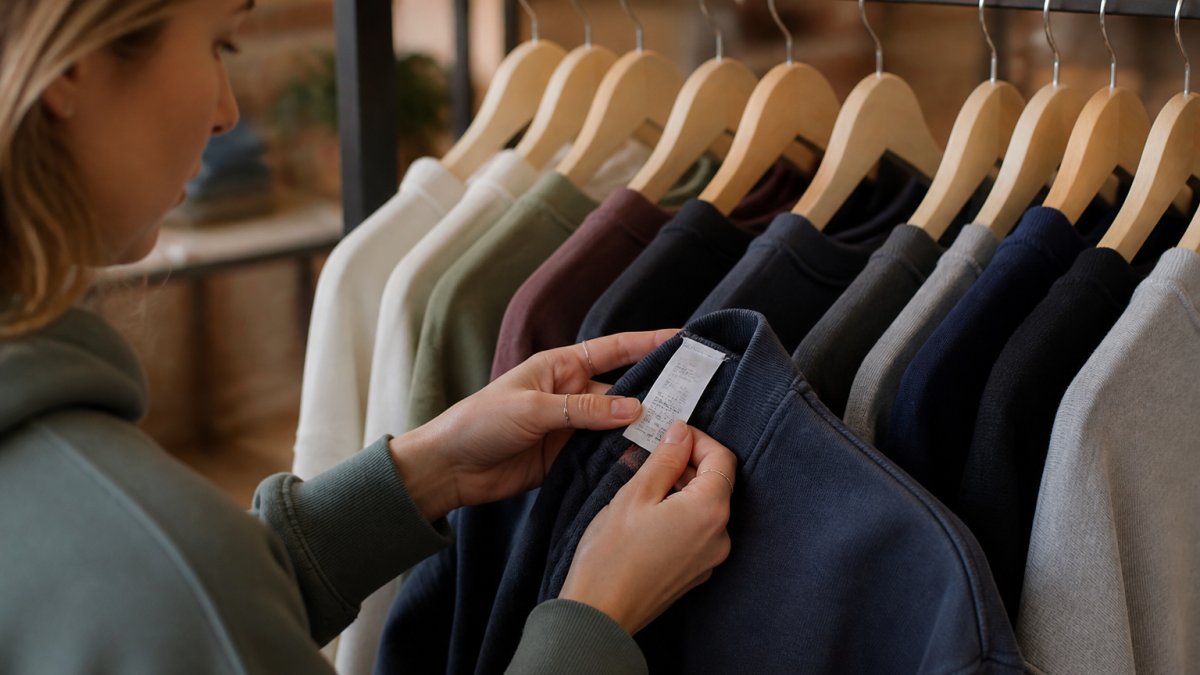
1. Read the Fiber Content Label
Check the percentage breakdown. Short staple cotton, low-quality polyester, and certain acrylic blends are common culprits; mostly short staple fibers means higher risk.
Blends need extra attention: a 60% cotton, 40% polyester blend might pill more than pure cotton because the fibers move differently under friction, creating stress points where pilling starts.
2. Feel the Fabric Surface
Run your hand across the garment in different directions. A smooth, dense surface resists pilling better than a loose, fuzzy one; soft, fluffy fabrics often shed loose fibers as pills within a few washes.
Press a fingernail gently against the fabric: if fibers lift easily, that's a warning sign.
3. Check Construction Type
Simple Words. Lasting Meaning. →
Knit or woven? Knits pill more often, so a sweater, cardigan, or jersey-knit shirt carries higher risk than a button-up or woven pants.
Hold the fabric up to light: if you can see through it easily or the weave feels loose, pilling is more likely.
How to Prevent Fabric Pilling Through Care and Selection
Once you own a garment, smart care extends its life and minimizes pilling.
Wash inside-out to reduce surface friction, and use cold water and gentle cycles for delicate fabrics. Hot water and heavy agitation speed up fiber breakdown and pilling.
Dry carefully. Machine drying creates friction and heat, so air dry whenever possible; if you must use a dryer, use low heat and remove items promptly (Optimizing washing conditions for smart fabrics: a comprehensive study).
Don't store pilling-prone garments in tight spaces where they rub against other clothes, and save soft sweaters for low-friction occasions.
When pilling does happen, gently use a fabric shaver or pilling comb to remove the balls. This won't stop future pilling but restores the garment's appearance.
Pilling is preventable when you know what to look for before you buy and how to care for your clothes afterward. Examine fiber content, test fabric density, and understand construction type as your first line of defense. Invest in well-made pieces that resist pilling, and you'll choose clothing that stays looking fresh season after season.
Frequently Asked Questions
What fabrics are most prone to pilling?
Short staple fibers pill more easily than long ones. Synthetic blends, especially polyester and acrylic mixed with natural fibers, are common culprits. Knit fabrics pill more readily than woven ones because loose fibers on the surface can ball up under friction. Looser weaves and lower-quality yarn construction also increase pilling risk. Check your fiber label and feel the fabric surface before purchasing.
How can you tell if a sweater will pill before buying it?
Look for three signals: First, read the fiber content label, short staple fibers and synthetic blends pill more easily. Second, run your finger across the fabric surface; a fuzzy or loose feel suggests loose fibers that will pill. Third, gently rub a hidden seam or interior tag with your fingernail or a coin for 10-15 seconds. If small balls form, pilling will likely occur with regular wear. Tightly knit, high-quality construction resists pilling better.
Does pilling mean the fabric is low quality?
Not always. Some high-quality natural fibers like wool and cotton can pill if fibers are short or construction is loose. However, pilling often signals lower durability, looser weave, or short staple fibers that won't hold together well. Premium fabrics typically use longer fibers, tighter construction, and better finishing treatments to resist pilling. When combined with other signs of poor construction, pilling suggests lower quality, but it's just one factor to evaluate.
