

Table of Contents
- Start With Fabric: The Best Fabrics for Sensitive Skin
- How to Build a Capsule Wardrobe for Comfort
- How to Choose Clothes for Comfort All Day
- Frequently Asked Questions
Last Updated: September 13, 2026
Start With Fabric: The Best Fabrics for Sensitive Skin
Learning how to choose clothes for comfort starts with what touches your skin first. The best fabrics for sensitive skin are natural fibers like organic cotton and bamboo viscose, which breathe and wick moisture without irritation.
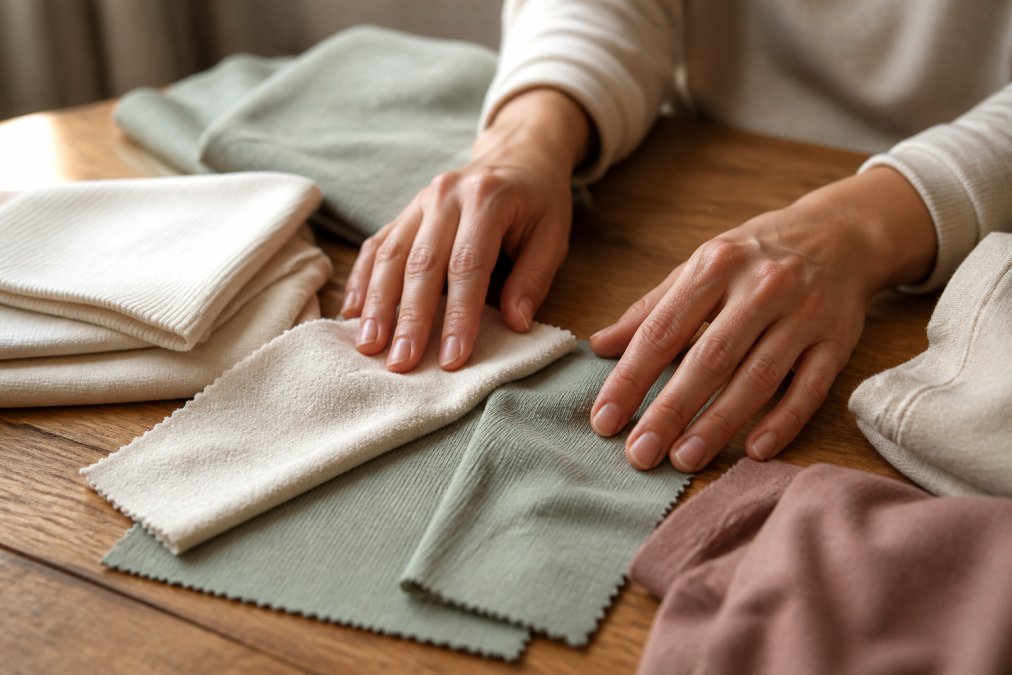
Fabric weight matters too: breathable fabrics with a smooth finish cause less friction than trend-driven materials.
| Fabric | Best For | Watch Out For |
|---|---|---|
| Organic cotton | Everyday wear, sensitive skin | Shrinking without pre-wash |
| Bamboo viscose | Thermal regulation, drape | Delicate handling in the wash |
| Cotton-modal blends | Stretch and shape retention | Lower durability over time |
FTC guidance on textile labeling and fiber content
How to Build a Capsule Wardrobe for Comfort
Building a capsule wardrobe for comfort means choosing fewer, more versatile pieces that all pass the same comfort test. Identify your comfort blueprint, the fabrics, fits, and finishes you reach for without thinking, then remove anything that fails on fit or freedom of movement.
- List the five pieces you wear most and note their fabric and weight
- Test each garment against your skin for five minutes before buying
- Choose a neutral base of breathable fabrics that layer together
- Replace worn items one at a time instead of overhauling everything
Buying fewer, better pieces also supports sustainable fabrics. A common mistake is chasing sales on fabrics you know irritate your skin, buy for your comfort blueprint, not the discount rack.
American Academy of Dermatology guidance on skin-friendly fabrics
How to Choose Clothes for Comfort All Day
Choosing clothes for comfort all day comes down to three factors: fabric breathability, seam placement, and how the garment moves with you. Moisture-wicking natural fibers keep you dry, while stretchable materials let you move without readjustment.
Layering matters for climate shifts: a light base layer under a midweight crewneck handles a cool morning and a warm office without a full change. Bearable Apparel's crewneck sweatshirts, like the Be Happy Crewneck and I Love Jesus Crewneck, are machine washable in warm water and tumble dry on medium, holding their soft feel wash after wash.


| Comfort Problem | Fix | Impact |
|---|---|---|
| Scratchy seams | Choose flatlock construction | Less skin irritation |
| Overheating | Switch to breathable natural fibers | Better thermal regulation |
| Restrictive fit | Prioritize freedom of movement | All-day wearability |
OEKO-TEX standard for testing harmful substances in textiles
Frequently Asked Questions
Which fabrics are best for all-day comfort?
Natural fibers like organic cotton and bamboo viscose breathe well and feel soft against skin, making them strong choices for all-day wear. Moisture-wicking blends help if you sweat during commutes or workouts. Avoid scratchy synthetic fabrics and stiff seam construction, which cause irritation over long hours. Fabric weight also matters: lighter knits suit warm days, while midweight options work for cooler weather.
How does fit impact the comfort of my clothing?
Fit affects freedom of movement more than fabric alone. Clothes that bunch, pinch, or feel baggy in odd places restrict you and cause distraction. Look for stretchable materials and ergonomic design at the shoulders, waist, and hips. A quick fit test: raise your arms, sit down, and walk a few steps. If anything pulls or rides up, size up or try a different cut.
What are the most common mistakes when buying comfortable clothing?
Buying for style alone without checking fabric weight or seam construction is the biggest mistake. Others include ignoring how a garment feels after 10 minutes of wear, skipping the tag check for skin sensitivity, and assuming all cotton is equal when organic cotton feels noticeably softer. Test clothes the way you'll actually wear them: sit, stretch, and layer before committing.
Comfortable clothing shouldn't be a compromise between feeling good and looking put-together. Bearable Apparel builds pieces designed for all-day wearability, from soft crewneck sweatshirts to versatile staples that move with you. Browse the collection, check the care instructions, and add to cart with confidence.
